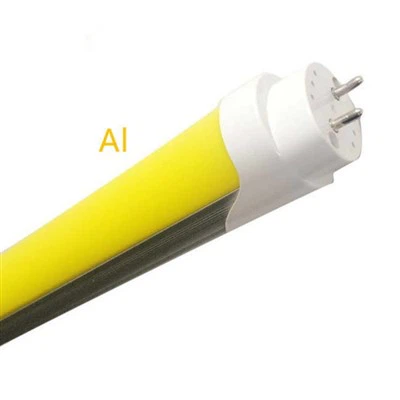
Today, it's critical for building firms to consider worksite carbon impacts. Using purpose-built LED worksite lights is a strategic move toward lowering the carbon impact of building sites after decades of useless, environmentally harmful practices.
Most people are aware of the advantages of LED lighting, including its lower energy usage, lower overall cost of ownership, extended lifespan, and environmental safety over conventional bulb-based lights. However, because impermanent illumination is usually used on building sites 24/7 for weeks at a time, it is frequently forgotten how concentrated the benefits are there.
The rapid development of LED technology has produced cutting-edge worksite lighting that can take the place of all conventional bulb-based worksite lighting. Over the past few decades, the situation with regard to impermanent illumination on building sites hasn't altered significantly. Most tasks still employ the standard 50- or 100-foot string lights with bulbs. It's common knowledge in the trade that stringlights present a variety of difficulties on any project. They take a long time to install, are difficult to maneuver around Ventilation equipment, need constant maintenance, and, regrettably, are frequently thrown away after their initial use. Manufacturers have consistently reduced quality over the years in an effort to satisfy consumer price expectations. Therefore, bulb-based illumination has evolved from an asset to a throwaway good, increasing pollution and expenses.
Lighting makers are now able to create interim lighting solutions that are especially suitable for the building industry thanks to advancements in LED technology. The shortcomings of their bulb-based peers do not limit the form factor of LED worksite lights. One 100-watt 360-degree LED work light, for instance, can light an area of 2,500 square feet instead of 250 feet worth of string lights. This significantly lowers the number of assembly sites needed from 25 to just 1, resulting in a reduction in labor expenses and energy usage. Additionally, there are LED worksite lights available that come with a daisy-chain cable already fitted, matching the suggested distance for the lights. Additionally, contractors can combat the current dearth of qualified labor by implementing more effective working strategies to shorten installation and upkeep times.
Garbage is also greatly decreased by recycling LED worksite lights from project to project and includes no harmful substances or poisonous heavy metals such as the mercury present in compact fluorescent and metal halide lamps. In order to guarantee their reusability across various projects, LED lights can be constructed to be incredibly robust and waterproof. This allows them to endure precipitation and pressure on the worksite. Over 150 pounds of building debris will not be generated during the 360-degree LED light's lifespan. If a solitary lamp can yield such favorable results, imagine what would happen if LED usage rates increased nationwide.
A 4 million square foot mixed-use sports and amusement facility in Edmonton, Alberta serves as a practical illustration of the energy reductions that can result from the use of purpose-built LED worksite illumination.
LED illumination in impermanent uses was still a comparatively novel idea five years ago. Nevertheless, the forward-thinking decision-makers on this project were dedicated to implementing the new technology and acknowledged the energy benefits that LED would bring. The choice definitely turned out to be wise. Early in 2015, the initial batch of LED worksite lights was installed. In the following 4 years, 5 structures totaling 4.2 million square feet were built with the aid of LED worksite lights, which resulted in a 90 percent decrease in energy usage. Stunningly, $3,203,573 in energy expenses were saved for the project. Using LED worksite lights instead of bulb-based lights saved the earth more than 32,000 metric tons of CO2, which is the same as taking 6,939 vehicles off the road or lighting 4,847 houses for a year.
It's clear that one of the most straightforward sustainable innovations to implement can have a meaningful impact on our collective fight against climate change. The energy savings that result when switching from bulb-based lighting to purpose-built LED jobsite lighting are frequently underestimated.